


Barges and Pontoons for Heavy Cargo: When to Go by Water Instead of Road
Barges and pontoons are the waterway option for packages too heavy or too large to move by road, when the project site is near a river or an inland port. From 01/07/2026, cargo over 100 tonnes or longer than 40 m carried by inland waterway requires a pre-approved transport plan.

Table of contents:
I. How do barges and pontoons differ?
A barge is a cargo-carrying vessel, either with a hold (hopper barge) or with a flat deck. A pontoon is a flat-deck floating unit, usually non-self-propelled, towed or pushed by a tug.
Criteria | Barge (hold/deck) | Pontoon |
Loading method | Crane into the hold or onto the deck | Crane onto the deck, or roll cargo on via a link-span ramp |
Suitable cargo | Steel, structural components, crated machinery | Very large packages, vehicles carrying whole tanks, equipment that must be rolled on |
Strengths | Widely available, many capacities | Wide deck that can take the full vehicle and cargo combination |
Pontoons also serve as the base for floating cranes, for example a 500-tonne crane on a 3,000-tonne pontoon, used for packages that shore cranes cannot lift.
II. When should you choose a barge or pontoon instead of road?
Waterway is the right choice when:
Roads cannot carry the load: the package exceeds road and bridge capacity, or strengthening them is too costly.
The project site is riverside: power plants and shipyards with their own jetty can be reached right next to the installation point.
Cargo cannot leave the port by road: because of dimensions, weight or permit conditions.
Total cost is lower: one barge trip carries several packages instead of many separately permitted truck trips.
Road regulations themselves require considering waterways: when applying for a road circulation permit for oversized/overweight cargo, the application must state why rail, inland waterway, maritime and air transport are not suitable (Article 22, Circular 12/2025/TT-BXD, amended by Circular 19/2026/TT-BXD).
Related articles:
- Hydraulic multi-axle trailers & SPMT: when they are mandatory
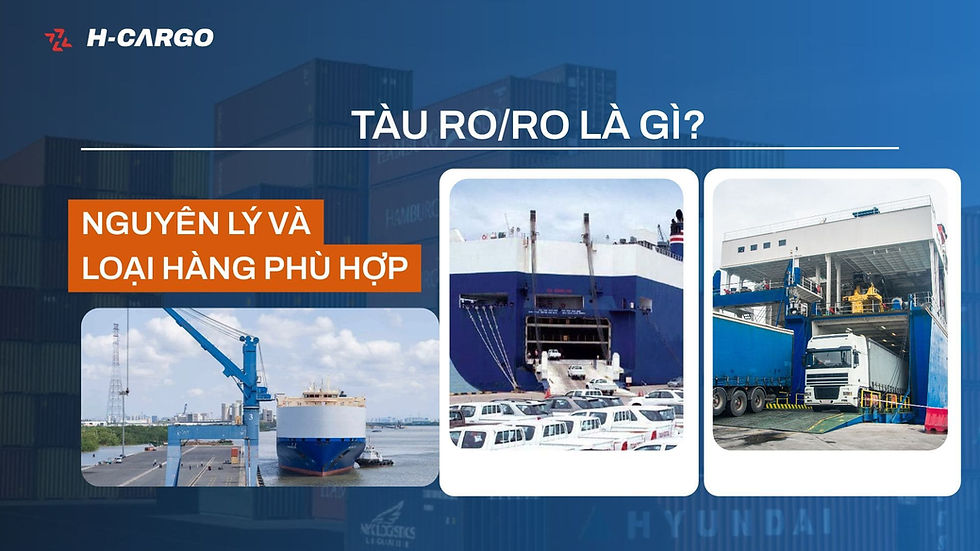
- What is a RO/RO vessel? How it works, suitable cargo and routes in Vietnam
III. What counts as oversized or overweight cargo on inland waterways?
Waterway thresholds are much higher than road thresholds. Under Article 4 of Decree 123/2026/ND-CP (effective 01/07/2026), indivisible cargo is classed as:
Mode | Overweight | Oversized | Legal basis |
Inland waterway | Total cargo weight over 100 tonnes | Longer than 40 m, or wider than 10 m, or higher than 4.5 m | Article 4, Decree 123/2026/ND-CP |
Road | Gross vehicle weight including cargo over 48 tonnes | Longer than 20.0 m, wider than 2.5 m, higher than 4.2 m (container trucks 4.35 m) | Article 10, Circular 12/2025/TT-BXD |
Key point: the road threshold counts both vehicle and cargo, while the waterway threshold counts cargo weight only. A 60-tonne package is already overweight once on a truck, but not overweight on a barge.
IV. What procedures apply to heavy cargo by barge?
Before transport, the master, carrier or transport operator must prepare a transport plan and submit it to the competent authority for approval (Article 4, Decree 123/2026/ND-CP). The plan covers:
Route conditions: channel width, depth and bend radius, and vertical clearance of structures crossing the river.
Cargo dimensions and total weight.
Expected timing, port of departure and port of arrival.
Type and dimensions of the vessel.
Safety instructions and any assistance required.
Approving authority: the Vietnam Maritime and Waterway Administration (for vessels leaving seaports or travelling between provinces); the provincial Department of Construction (for vessels operating within one province). The review period is 2 days from receipt of the plan.
V. How has H-Cargo moved cargo by barge?

One of the shipments H-Cargo has handled:
POL: Lotus Port, Ho Chi Minh City
POD: TVP Port, Phu My
Commodity name: Steel flanges (steel flange)
Volume: 13 packages, about 290 tonnes
Scope of work: Discharging from vessel to barge at Lotus Port, lashing on the barge, barge transport to Phu My, discharging from barge onto trucks
On a route like this, every change of transport mode (vessel to barge, barge to truck) is a risk point that needs its own lifting and lashing plan.
Have oversized or heavy cargo that needs to go by barge? Send the dimensions, weight, pickup point and project location, and H-Cargo will compare barge and road options. Get a quote
VI. What waterway risks should be planned for?
Waterways solve the weight problem but add new variables:
Tides and draft: these decide berthing windows and the barge's actual load capacity.
Bridge clearance: cargo height plus deck height must pass under every bridge on the route.
Jetties at both ends: enough bearing capacity and lifting equipment, or suitable conditions to roll cargo onto the pontoon. For crane selection, see our article on project cargo lifting equipment.
Deck lashing: calculate transverse and longitudinal securing forces, as cargo moves with the waves.
Final road leg: the jetty-to-site leg may still need hydraulic multi-axle trailers and SPMT and a circulation permit.
VII. What should shippers prepare for a transport proposal?
Information | Why it is needed |
Dimensions and weight of each package, centre of gravity, lifting points | Choosing a barge or pontoon, checking clearances |
Project location and nearest jetty | Whether waterway can reach close to the site |
Ground conditions at the jetty and the site | Planning the lift or roll-on |
Required delivery date | Scheduling around tides and approval time |
VIII. Frequently asked questions
How heavy must cargo be to require a waterway transport plan?
Indivisible cargo with a total weight over 100 tonnes, or longer than 40 m, wider than 10 m or higher than 4.5 m (Decree 123/2026/ND-CP).
Is barge cheaper than road?
It depends on the shipment. For very heavy packages or many packages, barge usually cuts permit costs, road strengthening and the number of truck trips; over short distances, road may be simpler.
When is a pontoon used instead of a barge?
When you need a wide deck, need to roll the cargo or the whole loaded vehicle on via a ramp, or need a base for a floating crane.
Who applies for approval of a waterway transport plan?
The master, carrier or transport operator prepares and submits the plan to the Vietnam Maritime and Waterway Administration or the provincial Department of Construction, depending on the departure port and route.
IX. Conclusion
For heavy cargo, waterway is an option to compare from the start, especially when the project site is near a river. Three things to do:
Check whether the site has a jetty or inland port nearby, and the bridge clearances on the route.
Check the package against both sets of thresholds: 48 tonnes (road, including the vehicle) and 100 tonnes (waterway).
Calculate the full route cost including transshipment at both ends, not just the barge freight.
H-Cargo can plan your move through our project cargo transport service; for detailed road rules, see our article on oversized and heavy-lift cargo transport.
Author: Navy Ngo - Project team
Contact us for a free consultation:
H-Cargo International Logistics
113-115 Ung Van Khiem St., Ward Thanh My Tay, Ho Chi Minh City
Tel: +84 888 909 186
Email: project@hcargovn.com
Web: www.hcargovn.com


Comments