


Major Seaports in Europe: 8 Key Ports in Global Trade
In the global logistics system, Europe's major seaports play a key role in trade between Europe and the rest of the world. They are large maritime hubs with high throughput, modern infrastructure and strong connections to inland road and rail networks. In this article, H-Cargo Logistics summarises the most important seaports in Europe to give you an overview of the region's maritime logistics system.

Contents:
I. Criteria for a major European seaport
To identify a major seaport in Europe, logistics experts look at several criteria rather than size alone.
Throughput: the number of containers (TEU) or tonnage handled each year.
Strategic location: close to international shipping lanes, connecting Europe with Asia, the Americas and Africa.
Modern logistics infrastructure: berths, yards, automated handling systems and smart management technology.
Inland connectivity: strong rail, road and inland logistics links for fast distribution.
Value-added logistics services: bonded warehouses, distribution centres, customs and logistics services.
These criteria help assess the importance and competitiveness of each port in the region.
Related articles:
- Container Shipping Rates from Vietnam to the Netherlands by Sea
- Container Shipping Rates from Vietnam to Belgium by Sea
- What Is Transit Time in Shipping? How to Calculate International Transit Time
II. The largest and most important seaports in Europe
Europe has many large seaports that play an important role in international trade and the global supply chain. They serve intra-EU trade and act as gateways connecting cargo between Asia, Europe, the Americas and the Mediterranean.
1. Port of Rotterdam
The Port of Rotterdam is Europe's largest seaport and one of the world's leading transhipment hubs. It has a modern logistics system with strong sea, road, rail and inland waterway connections.
Highlights:
The main trade gateway of the Netherlands and Europe.
Handles a very large volume of cargo every year.
Well connected to Germany, Belgium, France and Central Europe.
Important for container, bulk and energy shipping.
In short, Rotterdam is Europe's central port, with a major influence on international cargo flows.

2. Port of Antwerp-Bruges
The Port of Antwerp-Bruges is a strategic port in the Benelux region, known for its integrated logistics and ability to handle a wide range of cargo. It is one of the most important ports in Northern Europe.
Highlights:
Well-developed warehousing and logistics.
Strong in containers, industrial goods and chemicals.
Convenient access to Belgium, the Netherlands, Germany and France.
A major distribution hub for Europe.
In short, Antwerp-Bruges is a key port for businesses shipping into Western and Central Europe.
3. Port of Hamburg
The Port of Hamburg is Germany's main trade gateway and plays a major role in moving cargo into Central Europe. It is especially important for international container services.
Highlights:
One of Germany's leading seaports.
Deeply connected to rail and inland logistics.
Serves Germany, Austria, Czechia, Poland and Central Europe.
Holds an important place in Europe's industrial supply chain.
In short, Hamburg is a key choice for cargo destined for Germany and Central Europe.

4. Port of Valencia
The Port of Valencia is Spain's largest container port and an important transport hub in the Mediterranean. It plays a major role in trade between Europe, North Africa and Asia.
Highlights:
A key container port for Spain.
Well located on Mediterranean shipping routes.
Serves import-export cargo for the Iberian Peninsula.
Connected to many international services.
In short, Valencia is an important port for cargo moving through Southern Europe and the Mediterranean.
5. Port of Felixstowe
The Port of Felixstowe is the UK's largest container port, handling a large share of the country's container imports. It is a key gateway into the UK market.
Highlights:
The UK's main container port.
Served by many major international services.
Connected to the UK's domestic distribution network.
Important for consumer goods, industrial goods and e-commerce.
In short, Felixstowe is a key port for cargo imported into the UK.
6. Port of Algeciras
The Port of Algeciras is a strategic transhipment port near the Strait of Gibraltar, linking the Atlantic and the Mediterranean. It sits on major international shipping lanes.
Highlights:
Located where trade between Europe, Africa and Asia meets.
Strong in container transhipment.
Close to major shipping routes.
Suitable for cargo transhipped via the Mediterranean.
In short, Algeciras is an important transhipment port in the global shipping network.
7. Port of Piraeus
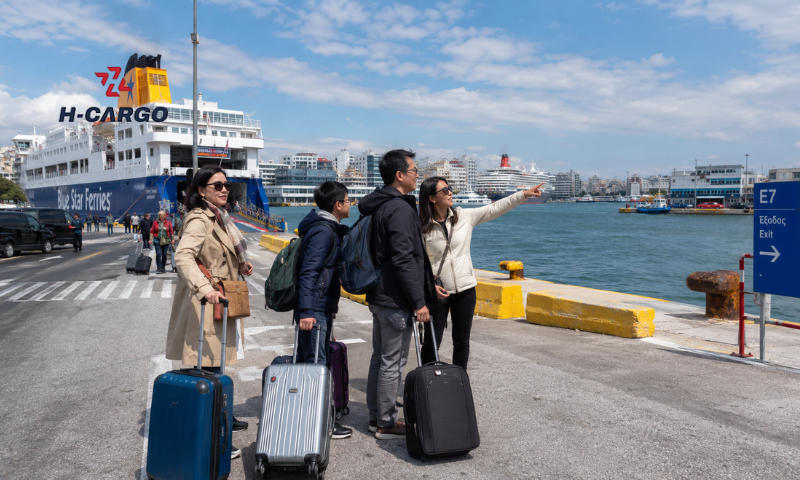
The Port of Piraeus is Greece's main maritime gateway and is growing into a major transhipment hub in the Eastern Mediterranean. It plays a prominent role in moving cargo from Asia into Europe.
Highlights:
Well located in the Eastern Mediterranean.
An important transhipment point for cargo from Asia.
Connected to the Balkans and Eastern Europe.
Growing strongly in container shipping.
In short, Piraeus is playing an increasingly important role in the Asia-Europe supply chain.
8. Port of Marseille-Fos
The Port of Marseille-Fos is France's largest seaport, handling industrial, energy, bulk and container cargo. It is France's key gateway to the Mediterranean.
Highlights:
France's largest port.
Handles a wide range of cargo.
Important for industrial and energy shipping.
Connected to France and Southern Europe.
In short, Marseille-Fos is France's strategic port, especially for industrial cargo and Mediterranean routes.
III. The role of European seaports in the global supply chain
European seaports are vital to the global supply chain, serving domestic import-export and acting as transhipment points between major regions. With developed logistics systems, they connect trade, optimise transport and support international distribution.
The main roles of European seaports:
Connecting intercontinental trade: key transhipment points between Asia, Europe and the Americas.
International distribution hubs: many ports act as logistics hubs distributing cargo across Europe.
Influencing global freight rates: congestion or smooth operations at major ports directly affect shipping costs.
Driving trade and industry: ports create ecosystems of logistics, warehousing, manufacturing and services.
Supporting modern supply chains: technology reduces handling time, optimises operations and improves efficiency.
In short, European seaports are a vital link in international trade. Their stable operation keeps cargo moving, lowers logistics costs and helps the global supply chain run more efficiently.
Frequently asked questions (FAQ)
What is the largest seaport in Europe?
The Port of Rotterdam in the Netherlands is Europe's largest seaport and one of the world's leading transhipment hubs.
Which European ports are best for cargo going to Germany and Central Europe?
Rotterdam, Antwerp-Bruges and Hamburg are the main gateways, with strong rail, road and inland waterway links into Germany and Central Europe.
Which ports serve Southern Europe and the Mediterranean?
Valencia, Algeciras, Piraeus and Marseille-Fos are the key ports for cargo moving through Southern Europe and the Mediterranean.
IV. Conclusion
Europe's major seaports are the arteries of the global logistics system, not only in size but also in connectivity and efficiency. Understanding each port helps businesses choose the right route and optimise cost and transit time.
If your business needs advice on sea freight routes, transhipment ports or optimising its international supply chain, contact us for an effective, professional logistics solution.
Contact us for a free consultation:
H-Cargo International Logistics
113-115 Ung Van Khiem St., Ward Thanh My Tay, Ho Chi Minh City
Tel: +84 888 909 186
Email: jack.tran@hcargovn.com
Web: www.hcargovn.com
References:
- Port of Rotterdam, Port of Antwerp-Bruges and Port of Hamburg official websites
- Port authority publications for Valencia, Felixstowe, Algeciras, Piraeus and Marseille-Fos
Last reviewed: 18/11/2026


Comments